
Empowering Communities Through Charitable Initiatives
Our Journey: Helping the Community Thrive
N-FODI started in 2016 in Nabikuyi Village, Nakiswiga Parish, Nawampiti Subcounty, Luuka District Uganda 🇺🇬 East Africa as a children and food security activism group. The community in this area is manifested with grave food insecurity, high levels of Sex Gender Based Violence, unemployment, financial Illiteracy, malnutrition, child abuse, poverty and deforestation.
It was against this background that this Organization was started to help sensitize the community to have some of these issues solved.
Communities were sensitized on the dangers of food insecurity and thus encouraged to adopt modern farming methods/practices to enhance on yields. Luuka being a district where they mainly grow Sugarcane as a cash crop, there's little or no land for subsistence farming. Even the small units of land available are infertile hence the need to adopt and embark on modern agriculture to rejuvenate the infertile soils to increase production. Women who engages in food production owns no land and therefore, they are encouraged to use the smallest piece of land they have through renting or personal to produce highly with high value crops.
In 2021, the Organization attained a legal status and labor was recruited formerly. We developed a wider scope and on board, having food security, empowering the less privileged in the community such as children, widows, elderly, disabled and youths, Sex Gender Based Violence mitigation, environmental conservation, and financial literacy as all are crosscutting issues detering development in rural communities.
We care for needy children. Some are opharns in our opharnage and some are home connected but getting support such as tuition, feeding, clothes and medication from us. These children are neglected by their poor parents and end up on streets. Others end up on streets as a result of poverty and domestic violence in homes they come from.
We realized that we can't tackle one problem at ago because it's a chain. Lack of food in homesteads leads to domestic violence thus broken up families and the children move to streets. Food shortage also leads to school dropouts. Children loose interest to attend school with an empty stomach.
A home with food therefore, they are happy, healthy and productive.
Farming being the main socio-economic activity in Luuka District, the Organization plays a major role in this sector as far as empowering rural farmers with modern farming agronomic skills, post harvest handling and marketing of the surplus produce. The lack of opportunities in formal sector employment and living below the poverty line (decline in minimum wage) has led to the growth of the informal sector hence the need for financial literacy.
Women and youths are saving in groups of 30 members each and we bost of 10 groups for women and 05 groups for youths. They borrow their savings for investment and return the profits to the group.
This is also our area of concern to help people learn business dynamics such as how to save for future use and investment.
Transforming Lives: The Youth Beekeeping Venture
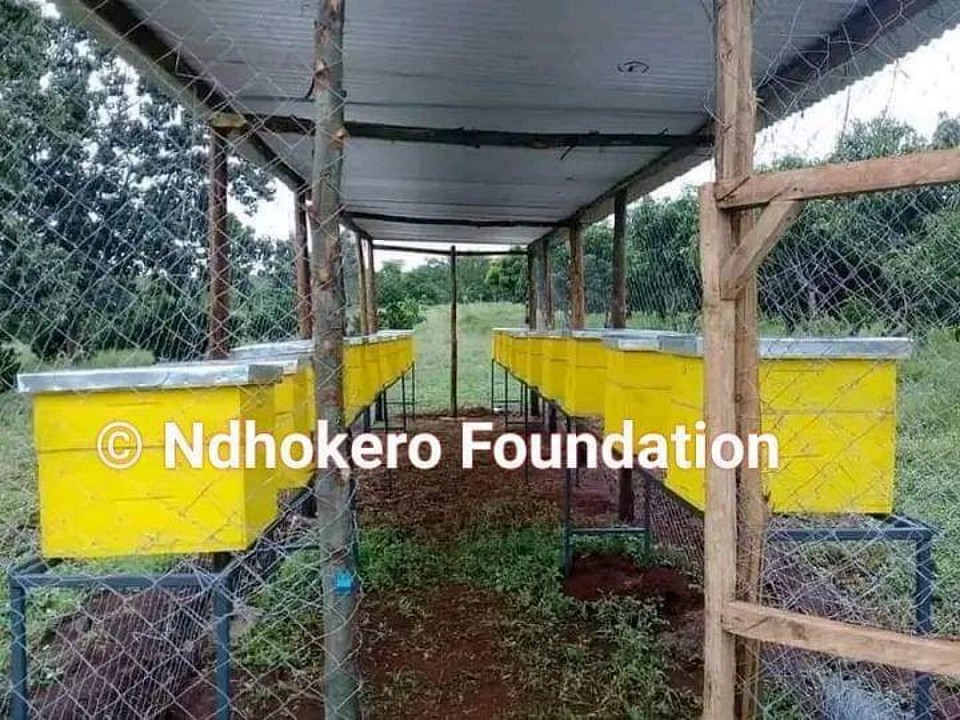
Langstroth Bee Hives House
This project was kick-started in 2016 with 10 KTB hives (conventional). Production was at 70kgs of processed honey per annum. One KTB (Kenya Top Bar) hive has capacity to produce 30kgs of honey per year if well tended with flowers around. Meaning our production was law as beginners by then.
Production increased along the way and we started packing with a brand name of Ndhokero Foundation Honey. We abandoned the conventional bee hives (KTB) and adopted the modern Langstroth Hives with a quarterly harvest per annum. It's a small demonstration project but with room for enlargement if we get donors to support this project. Our aim is to have 100 hives for modern Langstroth.
We believe, if every youth in the community posseses 10 hives, it's a good venture for them to change their lives because bee keeping is a high value venture. The price of a kilogram of honey on Ugandan market is 30,000/= Ugx that's approximately $ 8. Yet you do not invest alot in feeding them.
Addressing Deforestation: Our Environmental Initiatives
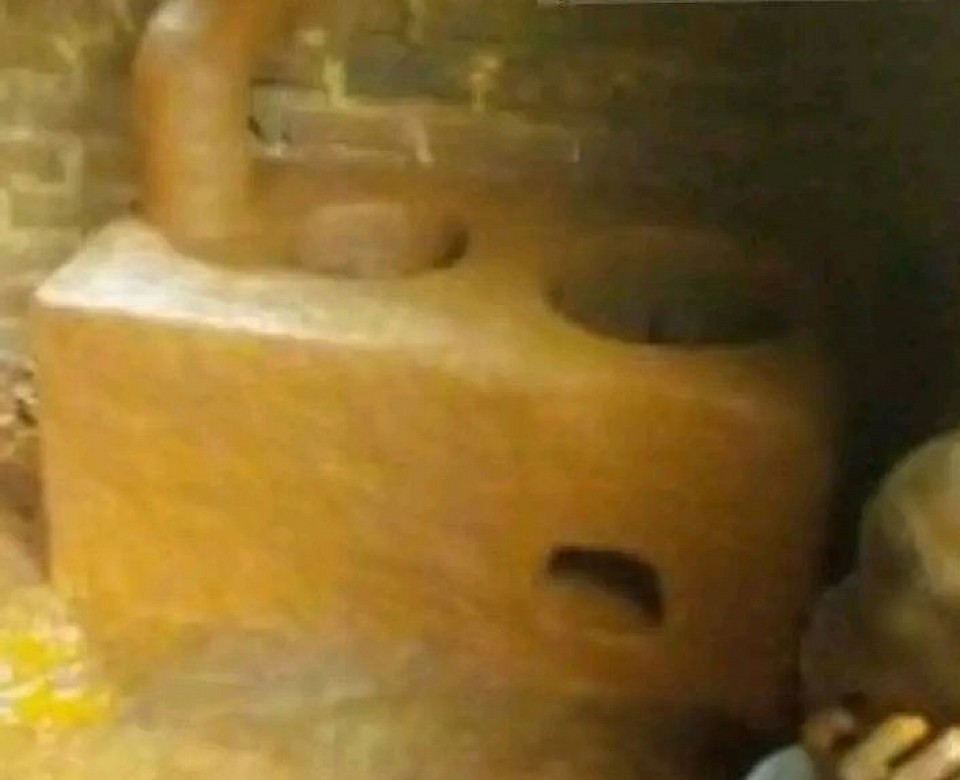
Energy Saving Stove
In Uganda, deforestation rates are sky high as a result of cutting down trees to burn charcoal and or firewood for cooking. This has increased the global phenomenon of climate change. The consistent cutting down of trees for firewood leads to global warming and depletion of the ozone layer against the UN Sustainable Development Goal 13 that call for action to combat climate change and its impacts.
As an Organization therefore, we designed the above energy saving Stove to reduce on the firewood rate used in cooking family size meals. It saves energy as few firewood will be required to prepare a meal compared to the open fire place used by most homesteads in African communities.
Communities have been encouraged to adopt them so as to reduce on deforestation rates and also have smart cooking in homes.